


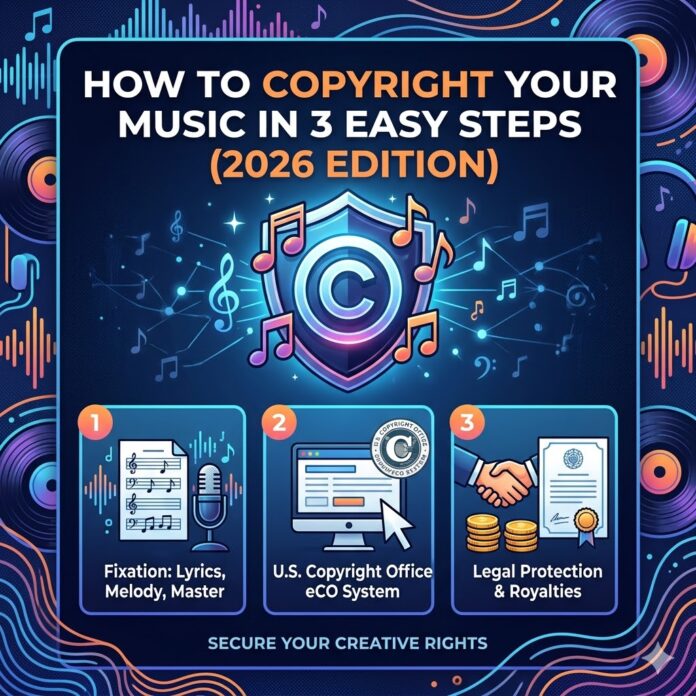
Copyrighting your music feels like the ultimate “boring adult” task. But if you’re pouring your soul into a track, the last thing you want is someone else cashing in on your hard work because you didn’t spend twenty minutes on a government website.
Forget the old myths about mailing a CD to yourself—that doesn’t hold up in court. If you want to actually own your music in 2026, here is the straightforward, no-nonsense way to get it done in three steps.
1. Get Your Files in Order
Before you even open a browser tab, you need your “deposit” materials ready. This is just the official term for the copy of the song you’re sending to the Library of Congress.
-
The Song Itself: If you’re protecting the lyrics and melody, a PDF of your lyric sheet or a simple lead sheet works best.
-
The Recording: If you’re protecting the actual master track, have a high-quality MP3 or WAV file ready to upload.
-
The AI Factor: In 2026, the Copyright Office is pretty strict about AI. If you used any generative tools to help write or produce the track, just be honest about which parts are yours and which parts the tech handled. It’s better to disclose it now than to have your copyright challenged later.
2. Pick the Right Application
Go to copyright page and don’t let the 90s-era website design scare you off. You usually have two main choices:
-
The Single Application: Perfect if you’re just dropping one song and you’re the only person who wrote it. It’s the cheapest way to go (usually around $45).
-
The Group Registration (GRAM): If you’ve got an album or an EP, do not file them one by one. You can bundle up to 20 songs on a single application for about $85. It’ll save you a fortune in filing fees.
3. Pay the Fee and Upload
Once you’ve filled out who owns what, you’ll hit the payment screen.
-
Pay the Fee: Use a card or electronic check.
-
The Final Step (Don’t skip this!): After you pay, the system will ask you to upload your files. A lot of people think they’re done once they pay—they aren’t. Make sure you see the confirmation that your files actually uploaded.
-
The Waiting Game: You’ll get a “Certificate of Registration” in the mail eventually, but your protection technically starts the second you hit submit.
Key Takeaways for 2026
-
Poor Man’s Copyright is a Myth: It won’t help you in a lawsuit.
-
Form SR vs. Form PA: If you own the lyrics and the master recording, try to file them together to save cash.
-
Keep Your Records: Save the confirmation email you get after filing. It’s your proof while you wait for the official paper.
Protecting your music isn’t just about lawsuits; it’s about making sure your creative legacy is actually yours.



















 🔥 Limited Time: Get 55% OFF All Plans - Ends in: