


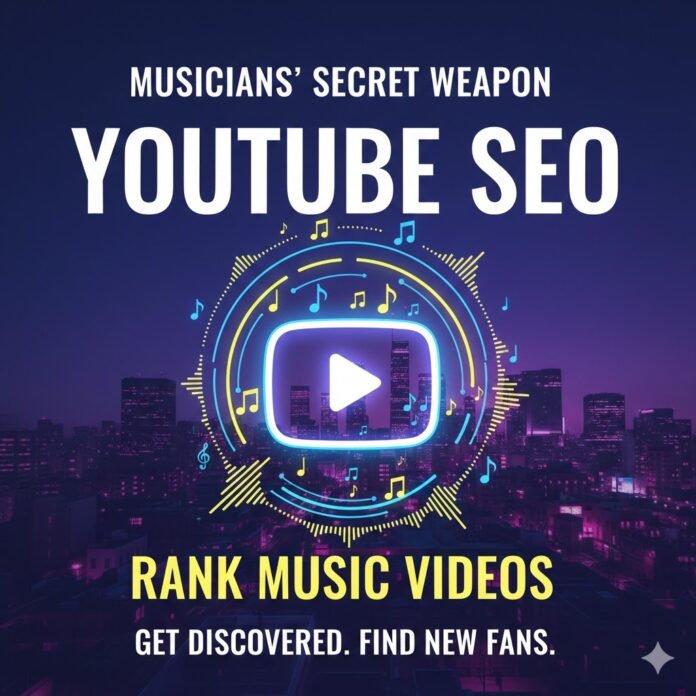
🚀 The Musician’s Secret Weapon: Mastering YouTube SEO for High-Intent Searches
For independent musicians and established artists alike, YouTube isn’t just a place to upload music—it’s the world’s largest music search engine. But with millions of videos uploaded daily, how do you make sure your latest single or official music video gets discovered by new fans who are actively looking for music in your niche?
The answer lies in YouTube SEO (Search Engine Optimization). By strategically optimizing your video’s metadata, you can rank higher for what we call “high-intent” searches—queries that show a viewer is ready and eager to listen to new music, a specific genre, or an artist like you.
Here is your essential guide to optimizing your music videos using the right Title, Description, Tags, and Chapter Markers to dominate the search results.
1. The High-Impact Title: A Click-Worthy Formula
Your title is the first thing a potential fan sees. It needs to be a perfect blend of SEO value and click-appeal.
-
Lead with Keywords: Place your most important keywords—usually your Artist Name and Song Title—near the front. This is a primary signal to the YouTube algorithm.
-
Formula:
[Artist Name] - [Song Title] | Official Music Video [Genre/Mood Keyword] -
Example:
The Neon Echo - Fading Light | Official Synthwave Music Video 2024
-
-
Keep it Concise: Aim for under 60-70 characters to ensure your full title isn’t cut off in search results on mobile and desktop.
-
Use Intent Modifiers: Adding words that signal the type of video (like “Official Music Video,” “Live Acoustic,” “Lyric Video,” or “Cover”) helps attract a more targeted viewer.
2. The Power-Packed Description: Context and Connectivity
A well-written description does more than summarize; it provides a wealth of searchable text for the algorithm and directs new fans to your other platforms.
The Crucial First 1-2 Sentences
The first 150 characters are visible without clicking “Show More,” so they must be perfect.
-
Include Primary Keywords: Reiterate your Artist Name, Song Title, and Genre.
-
Add an Immediate CTA: Include a direct link to stream the song on Spotify, Apple Music, etc., right away. This is high-intent traffic!
Example Opener: “The Neon Echo’s brand new synthwave single, “Fading Light,” is out now! Stream on Spotify: [LINK].”
The Full Description Body (200+ Words)
Use the rest of the 5,000-character space to add searchable context.
-
The Full Lyrics: Adding the complete lyrics is a major SEO win. It allows your video to appear in searches for specific lyric lines (e.g., “I’ve been running on empty for a long time song”).
-
Long-Tail Keywords: Naturally integrate phrases people search for when they don’t know your name yet.
-
Instead of just “Music”: Use “best synthwave songs,” “80s electronic music,” “driving music playlist.”
-
-
Connect Your World: Include a comprehensive list of links to all your streaming platforms, website, social media, and merchandise store.
3. The Chapter Markers: Improving Audience Retention
YouTube Chapters (timestamps) break your video into sections, which dramatically improves the viewer experience and audience retention—a key ranking factor.
-
Enable Seekability: For long videos (e.g., albums, live concerts, vlogs), chapters make it easy for viewers to jump to a specific song or section.
-
Boost SEO with Subtitles: Each chapter title acts as more text for the algorithm to index.
-
Format is Key: You must start with 00:00 and have at least three chapters in ascending order, with each segment being a minimum of 10 seconds.
Example:
00:00 Intro
00:35 Verse 1: Searching for the Light
01:10 Chorus: Fading Light
02:45 Guitar Solo Breakdown
03:30 Final Chorus
4. Strategic Tags: Telling the Algorithm Who You Are
Tags help classify your video, but they shouldn’t be random. They should be a thoughtful mix of terms that help YouTube’s recommendation engine categorize your music.
-
-
Branded Tags (Essential): Your artist name, variations of your name, and the song title.
-
Genre Tags (Targeted): Use both broad and specific genre terms.
-
Example:
synthwave,electronic music,80s pop,new retro wave
-
-
Descriptive/Mood Tags (High-Intent): Think about the feeling of the song.
-
Example:
driving music,chill electronic,sad synth song,late night vibes
-
-
Competitor/Related Artist Tags: Include the names of 2-3 artists who sound similar to you. This helps your video appear in the “Suggested Videos” section for their fans.
-
💡 Pro-Tip: Think Like a New Fan
The biggest mistake is optimizing only for people who already know your name. To capture high-intent new fans, always ask yourself:
-
-
-
“What would someone search if they didn’t know my name, but love my genre?”
-
Answer:
best indie folk songs 2024,guitar covers pop punk,music like Tame Impala
-
-
“What problem does my video solve?”
-
Answer:
study music playlist,running workout songs,wedding processional acoustic
-
-
-
By consistently applying these four metadata pillars, you turn your music video into a magnet for the exact audience you need to grow your fanbase.

















 🔥 Limited Time: Get 55% OFF All Plans - Ends in: