


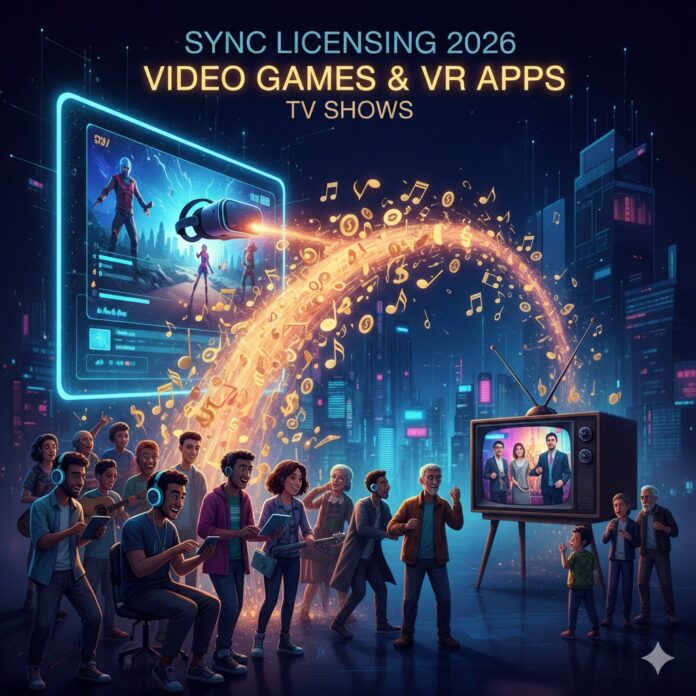
Sync Licensing in 2026: Why Video Games & VR Apps Are Outpacing TV for Music Royalties
The landscape of music licensing is shifting dramatically. For years, television shows were the holy grail for sync licensing, offering artists and publishers significant placements and royalties. However, as we accelerate towards 2026, a new paradigm is emerging: video games and VR applications are now often outbidding and outpaying traditional TV shows for music sync licenses.
If you’re a musician, composer, music supervisor, or anyone involved in the music industry, understanding this monumental shift is crucial for maximizing your earning potential.
The Rise of Interactive Media: A New Frontier for Music
The exponential growth of the gaming industry, coupled with the burgeoning market for virtual reality (VR) and augmented reality (AR) experiences, has created an insatiable demand for high-quality, immersive audio. This isn’t just background music; it’s an integral part of the user experience, driving emotional connection, enhancing gameplay, and defining virtual worlds.
Why are these platforms proving to be more lucrative for sync licensing?
-
Immersive Experience is Paramount: In a video game or VR app, music is rarely a passive element. It dynamically responds to player actions, environment changes, and story progression. This deeply integrated role means the music is more critical to the product’s success and, consequently, its perceived value for licensing. Developers are willing to invest more in a core component of their user’s immersion.
-
Global Reach & Diverse Audiences: Modern video games and VR applications are launched globally, simultaneously reaching millions, if not billions, of players across diverse demographics. While a TV show might have strong regional appeal, a blockbuster game transcends geographical boundaries instantly, amplifying the exposure and, often, the licensing fees for the music within it.
-
Extended Engagement & Longevity: Players often spend hundreds, even thousands, of hours immersed in their favorite games and VR worlds. This extended engagement means the licensed music gets significantly more airtime and becomes deeply ingrained in the player’s experience. Unlike a TV episode that airs once or has a limited streaming window, a popular game can remain relevant and played for years, generating sustained value for its audio elements.
-
In-Game Purchases & Microtransactions: The business models of video games and VR apps frequently involve in-game purchases, DLCs (downloadable content), and microtransactions. A successful game generates continuous revenue long after its initial release. This robust, ongoing financial model allows developers greater flexibility and budget when it comes to securing premium music licenses.
-
Technological Advancement & Audio Quality: The technological capabilities of gaming consoles, high-end PCs, and VR headsets have advanced to deliver incredibly sophisticated audio experiences. This allows for complex sound design and high-fidelity music integration, making music an even more powerful tool for developers to leverage.
What Does This Mean for Musicians and Music Supervisors?
-
Diversify Your Pitching: While TV and film remain viable, actively pursue opportunities within the gaming and VR sectors. Network with game developers, VR studios, and specialized music supervisors in these fields.
-
Understand Interactive Audio: Familiarize yourself with the nuances of interactive music – adaptive scores, looping requirements, and stem delivery. Composers who understand how to create music that can be dynamically manipulated within an interactive environment will be highly sought after.
-
Metadata is King: Ensure your music is properly tagged with comprehensive metadata. This makes it easier for music supervisors to discover your tracks for specific moods, genres, and use cases relevant to gaming and VR.
-
Build Relationships: Attend industry conferences focused on gaming and immersive tech. These are prime opportunities to connect directly with decision-makers and understand the specific needs of this evolving market.
The future of sync licensing is dynamic and exciting. While the allure of a prime-time TV placement is still strong, the burgeoning worlds of video games and VR are proving to be increasingly lucrative and innovative spaces for music creators. By understanding these trends and adapting your strategies, you can unlock significant new revenue streams in 2026 and beyond.


















 🔥 Limited Time: Get 55% OFF All Plans - Ends in: