


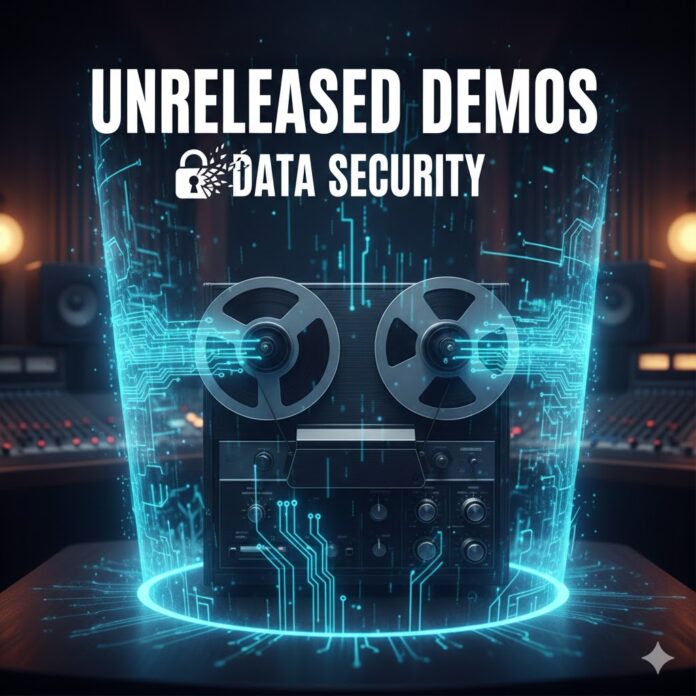
Your Music, Your Business: How to Keep Unreleased Demos from Leaking
There’s no worse feeling for an artist than waking up to a Twitter mention or a Discord link and realizing your unfinished demo is out in the wild. You spent months obsessing over the snare hit or the vocal chain, only for a low-quality export to blow the surprise for your fans.
In a world where everything is in the cloud, “perfect security” is a myth—but “smart security” is a must. If you want to keep your rollout under your control, you need to tighten up your digital circle.
1. Stop Treating Email Like a Vault
We’ve all done it: emailed a .WAV file to a collaborator with the subject line “V3_Final_Final.”
The problem? Once that email is sent, it lives in your “Sent” folder, their “Inbox,” and likely on a random server forever. If either of you gets hacked, that song is gone.
-
The Fix: Use professional sharing tools like Byta, Haulix, or even a password-protected Dropbox link.
-
The Rule: Never send a file without an expiration date. Give your team 48 hours to download it, then kill the link.
2. The Power of the “Watermark”
If you’re sending music to labels, DJs, or influencers, you need to know who to blame if things go sideways.
Digital watermarking isn’t just for photographers. Modern tools allow you to embed a hidden ID in the audio. If the song leaks to a forum, you can run that file through a scanner and see exactly which recipient leaked it. Usually, just telling people the file is watermarked is enough to keep them honest.
3. Lock Your Front Door (Digital Edition)
Most “hacks” aren’t some guy in a hoodie typing code; they’re just people guessing weak passwords or using SIM-swapping to get into your iCloud.
-
Enable 2FA: If you don’t have Two-Factor Authentication on your email and cloud storage, you’re basically leaving your studio door wide open.
-
Encrypt Your Drives: If you lose your laptop at the airport, is your life’s work unprotected? Use FileVault (Mac) or BitLocker (Windows) to make sure your hard drive is unreadable without your password.
4. The “Inner Circle” Protocol
Sometimes the leak comes from inside the house. It’s rarely malicious—it’s usually a friend or a “hype man” posting a 15-second snippet on their Instagram Story that gets ripped by a fan account.
-
No Phones in the Booth: It sounds “diva,” but it works. If you’re playing the final master for friends, ask them to keep the phones in their pockets.
-
The “Work in Progress” Warning: When sending tracks to collaborators, be crystal clear: “This is for your ears only. No snippets on socials.”
5. What if the Leak Happens Anyway?
First, take a breath. It happens to the best of us (just ask Kanye or Dua Lipa).
-
File the DMCA: Get your team or a service like IPRally to scrub the links from Reddit and YouTube immediately.
-
Don’t Acknowledge It (Unless You Have To): Sometimes, posting about a leak just directs more people to it.
-
Flip the Script: If the song is blowing up, consider dropping it early. Use the “leaked” energy to drive official streams.
The Bottom Line
Your music is your intellectual property. Treat it with the same respect you’d treat your bank account. Secure your links, lock your drives, and be careful who you trust with the “Send” button.















 🔥 Limited Time: Get 55% OFF All Plans - Ends in: