


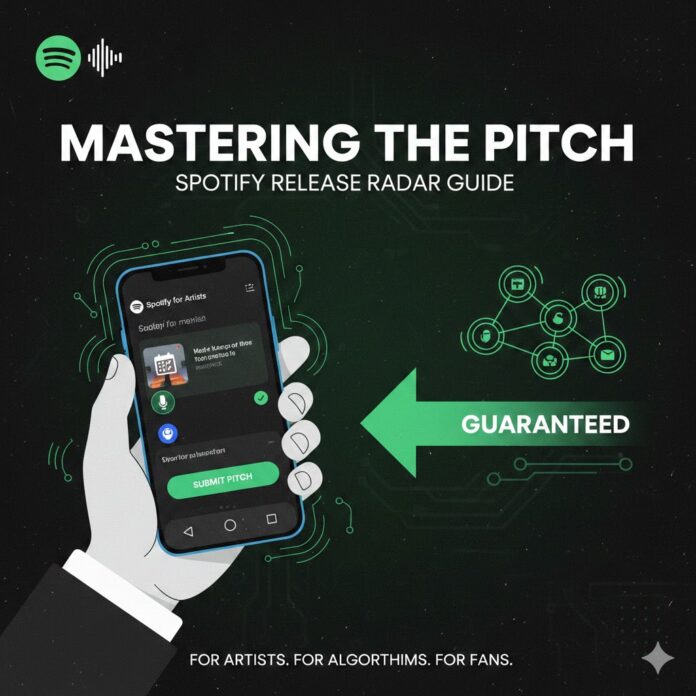
Mastering the Pitch: A No-BS Guide to Spotify Release Radar
We’ve all been there: You spend months producing, mixing, and agonizing over a single, only to drop it and hear… crickets.
If you’re waiting for a “big break” to happen by magic, you’re playing a losing game. On Spotify, the “magic” is actually a mix of a solid pitch and a very specific algorithm called Release Radar.
Here’s the reality: You might not land New Music Friday on your first try, but you can guarantee a spot on Release Radar if you play your cards right. Here is how to actually talk to Spotify editors without sounding like a spam bot.
1. The “Golden Window” (Don’t Wait Until Friday)
The biggest mistake indie artists make? Uploading their music on Monday and expecting a playlist spot by Friday.
Spotify officially says you need 7 days. The industry reality? You need 3 to 4 weeks. Think of it like booking a table at a popular restaurant. If you show up at 7:00 PM on a Saturday, you’re out of luck. If you call a month ahead, the host (the editor) can actually find a place for you. Aim to have your track delivered to Spotify and your pitch submitted at least 21 days before release.
2. Stop Guessing Your Genre
When you go into your Spotify for Artists dashboard to pitch, the metadata (tags) you choose is more important than the description.
-
Be Honest: If it’s “Lo-fi Indie,” don’t tag it as “Hyperpop” just because that’s trending.
-
The Vibe Check: Editors look for moods. Is this a “Late Night Drive” song or a “Sunday Morning Coffee” song? Pick the tags that match the feeling, not just the instruments.
3. The Pitch: Talk Like a Human
You have 500 characters. Most artists waste them saying, “This song is a total banger, please add it!” The editors already know you think your song is good. Instead, give them context. Use this simple 3-part formula:
-
The “Why”: Give them a one-sentence story. “Written after a breakup in a basement in Brooklyn using a vintage 80s synth.”
-
The “Proof”: Mention your wins. Did your last song get radio play? Did a TikTok sound go viral? Do you have 5k Instagram followers waiting for the drop?
-
The “Help”: Tell them how you are helping them. “I’m running $500 in Meta ads and sending this to my 2,000-person email list.” Spotify loves it when you bring the audience to them.
4. Why Release Radar is Your MVP
Editorial playlists are great for the ego, but Release Radar is better for your career. It’s an algorithmic playlist that goes out to every single person who follows you.
-
The Catch: You only get on Release Radar if you pitch the song. * The Goal: Spend the two weeks before your release telling fans to “Follow” you on Spotify, not just “Pre-save.” Followers are the fuel that makes the Release Radar engine run.
5. Clean Up Your House
If an editor likes your song, the first thing they do is click your profile. If you have no bio, a blurry header image from 2019, and no social links, they’ll assume you aren’t serious.
-
Update your bio (keep it short and punchy).
-
Add a Canvas. Those 8-second loops aren’t just for show; Spotify’s data shows songs with a Canvas get shared way more often.
The “Too Long; Didn’t Read” Checklist:
-
[ ] Distribute your track 5 weeks out.
-
[ ] Pitch via Spotify for Artists 3-4 weeks out.
-
[ ] Focus on “Follows,” not just streams.
-
[ ] Context > Hype in your written pitch.
Success on Spotify isn’t about “luck”—it’s about giving the algorithm and the editors exactly what they need to help you.
















 🔥 Limited Time: Get 55% OFF All Plans - Ends in: