


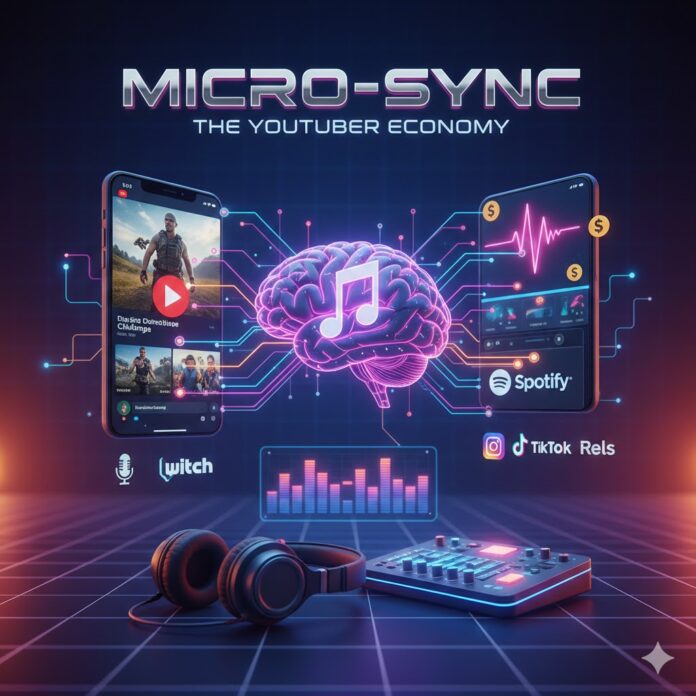
In the traditional music industry, landing a song on a Netflix original or a prime-time TV commercial was the “Holy Grail.” But as the creator economy matures, a new giant has emerged.
Welcome to the era of Micro-Sync.
High-budget YouTubers and Twitch streamers are no longer just “influencers”—they are digital production houses with budgets that rival cable networks. For musicians and composers, this means the big money is shifting from the silver screen to the smartphone screen.
What is Micro-Sync Licensing?
In the world of music rights, Sync (Synchronization) is the process of pairing music with moving images. Micro-sync is the high-volume, digital-first version of this. It covers music used in:
-
YouTube Videos (from vlogs to $1M+ production challenges)
-
Twitch Livestreams and VODs
-
TikToks and Instagram Reels
-
Podcast Advertisements
While a traditional sync deal might be a one-time five-figure check for a movie trailer, micro-sync relies on scale and automation. It’s the “death by a thousand cuts” strategy, where thousands of smaller licenses create a massive, recurring revenue stream.
Why the YouTuber Economy is Winning
Top-tier creators like MrBeast, Casey Neistat, or Airrack invest hundreds of thousands of dollars into a single video. They need “label-quality” music to keep their production value high, but they can’t risk copyright strikes that demonetize their content.
1. The Death of Stock Music
Modern audiences have “ear fatigue” for generic corporate background music. High-budget creators are now hunting for authentic, indie-artist vibes. They want music that sounds like a Spotify Top 50 hit, not a “Happy/Uplifting” royalty-free track from 2012.
2. High-Speed Licensing
Traditional sync deals can take months to negotiate. YouTubers upload weekly. Micro-sync platforms like Artlist, Epidemic Sound, and Musicbed have solved this by offering pre-cleared libraries. This allows a creator to license a world-class track in seconds, ensuring the artist gets paid and the creator stays safe.
3. The “Viral” Secondary Market
When a major YouTuber uses your track, it creates a “shazamable” moment. This leads to a spike in Spotify streams, which in turn triggers more micro-syncs as smaller creators follow the trend. It’s a self-sustaining ecosystem of discovery and revenue.
How to Cash In on the Micro-Sync Boom
If you are a producer or songwriter, “writing for the edit” is a specific skill set. Here is how to optimize your catalog for the YouTuber economy:
-
Create Stem Versions: Creators love to remove vocals or drums to make room for their voiceovers. Offering stems makes your track 10x more likely to be used.
-
Focus on “The Hook”: In the fast-paced world of YouTube, you only have 3 seconds to grab attention. Ensure your tracks have a strong, immediate identity.
-
Register with the Right Partners: Get your music onto platforms that specialize in the creator economy. Look into YouTube Creator Music, which allows creators to share ad revenue directly with you.
-
Metadata is King: Use descriptive tags. Instead of “Rock Song,” use “High-Energy Extreme Sports Intro” or “Cinematic Build-up for Challenge Reveal.”
The Bottom Line
The “Micro-Sync” market is no longer a “side hustle” for musicians. With the global creator economy valued at over $250 billion, the demand for high-quality, legally cleared music is at an all-time high.
The screen might be smaller, but the opportunity has never been bigger.
















 🔥 Limited Time: Get 55% OFF All Plans - Ends in: