


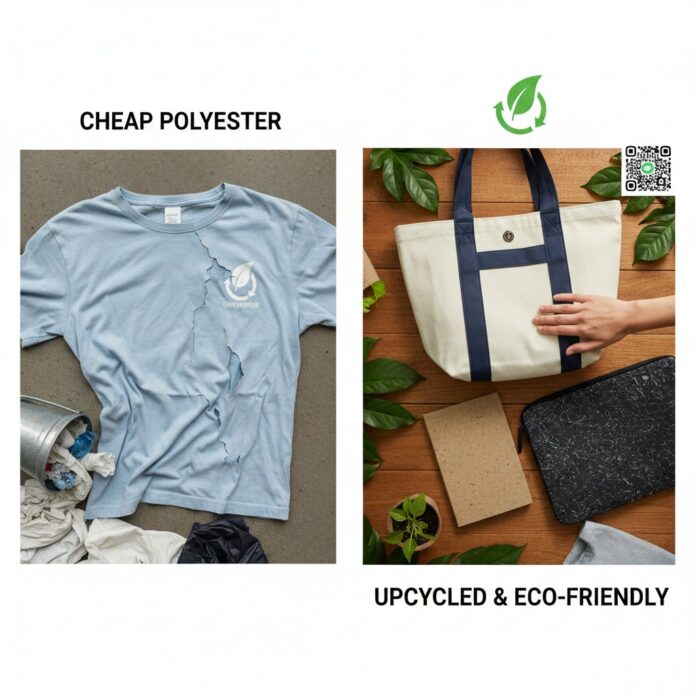
In 2026, the “swag” landscape has officially shifted. The days of handing out scratchy, thin polyester t-shirts that end up as cleaning rags (or worse, in a landfill) are over. Today, the most successful brands—from tech startups to heritage fashion houses—are pivoting toward upcycled and eco-friendly merchandise.
But why is “green” suddenly more profitable than “cheap”? If you’re looking to boost your brand’s perceived value and ROI this year, here is why sustainable merch is the only trend that matters in 2026.
1. The Death of “Disposable Culture”
Consumer psychology has undergone a massive transformation. According to 2026 market data, over 68% of consumers now actively seek out sustainable sourcing when making a purchase.
Cheap polyester merch feels like a burden to the modern recipient. It’s a physical manifestation of “waste.” In contrast, upcycled merch—items made from pre-existing materials like ocean plastic, deadstock fabric, or even repurposed billboard vinyl—carries a narrative of rescue and renewal.
SEO Tip: Use keywords like circular economy merchandise, sustainable corporate gifting, and zero-waste branding to capture this growing search intent.
2. Upcycled vs. Polyester: The Value Gap
While a polyester shirt might cost $5 to produce, its “perceived value” is often $0. An upcycled tote bag made from repurposed sails or climbing ropes, however, feels like a limited-edition collectible.
| Feature | Cheap Polyester Merch | Upcycled / Eco-Friendly Merch |
| Durability | Low (pills, thins out) | High (built to last) |
| Brand Perception | “Cheap” or “Outdated” | “Innovative” and “Conscious” |
| Environmental Impact | High (microplastics, fossil fuels) | Low (diverts waste from landfills) |
| Consumer Retention | Likely to be tossed | Kept for 2+ years |
3. The “Gen Z” Influence and Social Proof
By 2026, Gen Z and Millennials make up the majority of the workforce and consumer spending power. These generations prioritize authenticity over volume.
-
Storytelling: Every upcycled piece has a “Past Life.” Sharing that story on social media provides instant organic marketing.
-
Radical Transparency: 2026 trends show a 43% increase in engagement for brands using Digital Product Passports (DPPs)—QR codes on tags that show exactly where the material came from.
4. Regulatory Pressure and “Greenwashing”
In 2026, regulators (especially in the EU and North America) have tightened the belt on “greenwashing.” Claiming a product is “eco-friendly” just because it contains 5% recycled plastic no longer cuts it.
Brands are turning to upcycling because it is a tangible, verifiable way to reduce carbon footprints. Utilizing materials that already exist avoids the high energy costs of manufacturing virgin synthetics, which can cut $CO_2$ emissions by up to 79% per kilogram compared to virgin polyester.
5. Better ROI through Longevity
It seems counterintuitive: how does spending more on merch save money?
-
Cost per Impression: If a high-quality upcycled hoodie is worn 100 times, the cost per impression is pennies.
-
Brand Loyalty: A “cheap” gift can actually damage a client relationship. A thoughtful, eco-friendly gift reinforces that you value the recipient—and the planet.
[Image comparing the lifespan of a sustainable organic cotton t-shirt vs a synthetic polyester t-shirt]
Conclusion: Lead with Values
In 2026, your merchandise is a business card you can wear. Choosing upcycled materials isn’t just a “nice-to-have” anymore; it’s a strategic move to align with the circular economy and win the trust of a more conscious public.


















 🔥 Limited Time: Get 55% OFF All Plans - Ends in: