


🚀 Preparing for 2026: 5 Industry Changes Every Artist Should Be Ready For
The music and art world is on the cusp of a major transformation. As we look toward 2026, a perfect storm of technological advancement and regulatory shifts is reshaping how art is created, consumed, and owned. To thrive, artists must move from simply reacting to these changes to actively shaping their careers within this new landscape.
Here are five critical industry changes you need to understand and prepare for now.
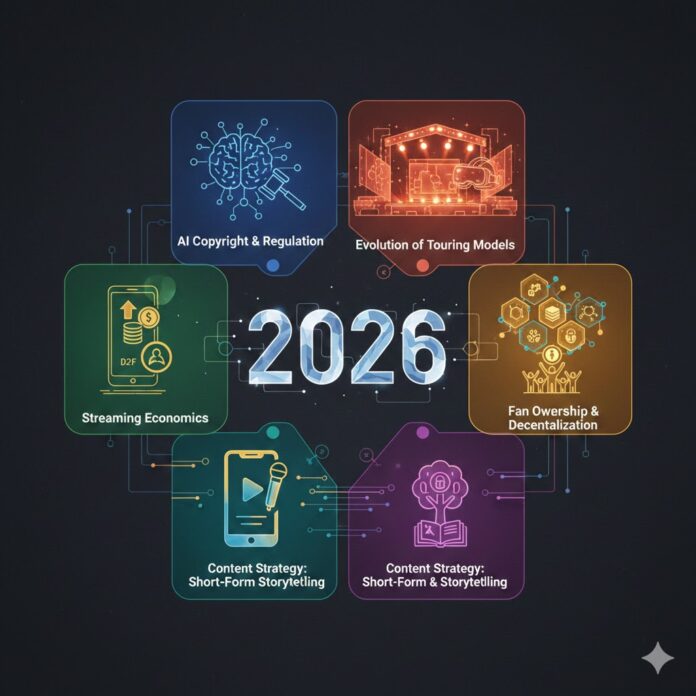
1. The AI Copyright Revolution and Regulation
Artificial Intelligence (AI) is the most disruptive force in the creative economy. By 2026, expect the current “Wild West” era to be replaced by stricter regulatory frameworks globally.
-
The Scramble for Copyright: Governments worldwide are working to define the legal boundaries of AI-generated content. Expect clearer, and potentially more restrictive, rules on whether copyrighted work can be used to train AI models without explicit compensation or licensing.
-
Embrace AI as a Partner: The winning strategy isn’t to fight AI, but to collaborate. Use AI tools for advanced music generation (composing, mixing, mastering) or visual art creation, but frame your human creativity as the essential differentiator.
-
The Human-Made Premium: As the market floods with generic, AI-made “background noise” music, human-made music for meaning, community, and connection will command a higher value. Focus your brand on your unique story and emotional authenticity.
2. Evolution of Touring Models: From Stadium to Screen
The traditional touring model is transforming, blending physical performances with immersive digital experiences.
-
Virtual & AR/VR Concerts Go Mainstream: Following the post-pandemic acceleration, virtual and Augmented Reality (AR)/Virtual Reality (VR) concerts are becoming a core revenue stream. Artists must prepare to offer interactive, 3D experiences that turn solo viewing into shared, global community moments.
-
Sustainable & Localized Touring: The pressure for eco-friendly tours is growing. Expect more artists to adopt green touring practices and explore localized, hybrid models that minimize environmental impact while maximizing fan engagement through integrated digital components.
-
The Live Streaming Economy: AI is set to boost live streaming, making it more personalized and efficient. Leveraging real-time translation and AI-driven personalization will be key to expanding your global reach and fostering more inclusive, interactive live shows.
3. Streaming Economics: The Shift to Fan-Centric Models
The long-standing frustration over low per-stream royalty rates is leading to significant changes in streaming monetization.
-
Platform Diversification is Critical: Don’t rely solely on one platform. Artists are increasingly turning to Direct-to-Fan (D2F) platforms like Bandcamp, Patreon, and independent websites to bypass intermediaries and capture a much larger share of revenue.
-
Focus on ‘Superfans’: New streaming models are emerging that prioritize the “superfan” or user-centric payouts, where the money from a user’s subscription goes directly to the artists they actually listen to. Build an engaged, committed audience who will drive the most value in these new economic systems.
-
Advanced Data & Analytics: Utilize AI-powered analytics to deeply understand your audience’s preferences and behavior. This data is the new currency, allowing you to develop smarter content strategies and monetization models outside of just streams.
4. Fan Ownership and the Decentralization of Art
Blockchain technology, including NFTs (Non-Fungible Tokens), is gaining traction as a way to give fans a direct stake in an artist’s success.
-
NFTs for Engagement and Royalties: Expect the NFT market to mature, moving from hype to practical utility. Artists will use NFTs not just for selling unique digital art, but for granting access to exclusive communities, pre-sale tickets, and fractional ownership of music masters or future royalties.
-
Blockchain-Enabled Transparency: Decentralized music platforms promise greater transparency in royalty distribution, ensuring artists get a larger, more traceable share of the revenue. Artists should investigate platforms that offer this level of control.
-
Community as the New Label: By leveraging D2F platforms and blockchain, artists can build independent empires, cultivating their community into a powerful force that funds, promotes, and co-creates alongside them, essentially becoming their own ‘mini-label.’
5. The Content Strategy: Quality, Authenticity, and Short-Form Video
The content landscape is demanding more, but in smaller, more authentic packages.
-
Short-Form Video Dominance: Platforms like TikTok, YouTube Shorts, and Instagram Reels will continue to drive a vast majority of music discovery. Artists must optimize their content for vertical, bite-sized formats to maximize virality and reach.
-
Prioritize a Digital Foundation: Your website remains your most critical digital asset—your 24/7 business hub. Ensure it has a mobile-first, responsive design and clear, high-quality images. It’s the central place where collectors verify your credibility and make purchases.
-
Storytelling Over Promotion: In a crowded digital space, authenticity and storytelling are critical differentiators. Share your creative process, your struggles, and your unique perspective. This builds a genuine connection with fans, differentiating your human-created work from AI-generated content.
The future of the creative industry is not about waiting for the next big platform to save you; it’s about becoming adaptable, tech-savvy, and audience-centric. Start experimenting with these tools and strategies today to secure your success in 2026 and beyond.











 🔥 Limited Time: Get 55% OFF All Plans - Ends in: