


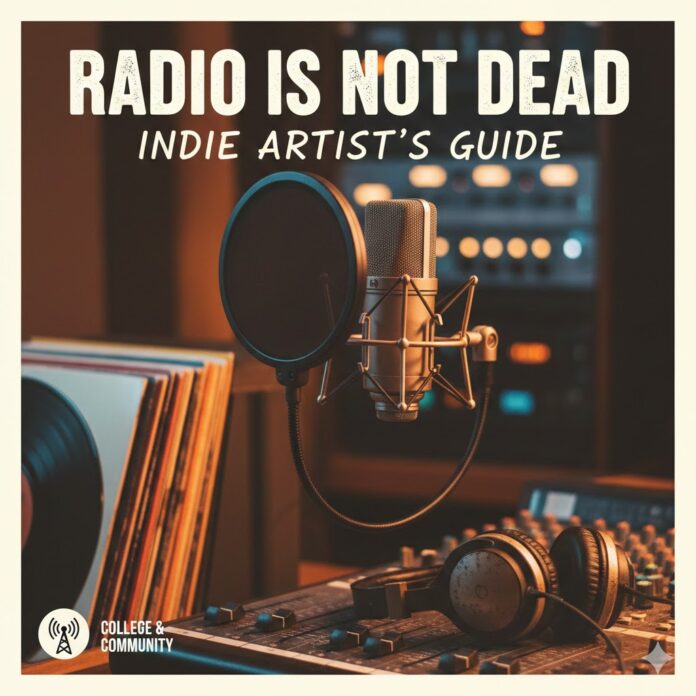
🎙️ Radio is Not Dead: A Guide to Pitching College and Community Radio for Indie Artists
In the digital age, it’s easy to assume traditional radio is obsolete. But for independent artists, the airwaves are very much alive—especially within the vibrant, non-commercial world of college and community radio.
These stations, powered by passionate volunteers and a commitment to diverse programming, are often the most receptive audience for your new, independent music. Unlike major commercial radio, which is driven by corporate playlists and chart success, college and community stations prioritize discovery and unique sounds.
Ready to get your music spinning? Here is your practical guide to effective outreach for non-commercial radio.
1. Research is Your First Spin 🎧
Before you pitch, you must know who you’re talking to. A generic, mass-produced email is a guaranteed trip to the trash bin.
-
Find the Right Stations: Focus your efforts on college radio stations (often designated by a call sign like KEXP, WFMU, or CKUT) and community radio stations. A quick Google search for “[City Name] college radio” or “community radio” is a great start.
-
Identify the Music Director (MD): The Music Director is the gatekeeper. Their name and email are almost always listed on the station’s website under “Staff,” “Contact,” or “Submissions.” Always address your pitch to them directly.
-
Know the Programming: Listen to the station, or check out their online charts/playlists. Do they play your genre? A death metal track sent to a station specializing in acoustic folk will not be successful. Personalize your pitch by mentioning a specific show or DJ whose taste aligns with your music.
2. Prepare Your Professional Radio Package 📦
You need to make it easy for the MD to listen, download, and file your music correctly.
| Component | What to Include | Why It’s Essential |
| Clean MP3/WAV File | High-quality audio (320 kbps MP3 is standard). Ensure the track has metadata (Artist Name, Song Title, Album, Genre). | Professional quality is mandatory. Metadata makes the track readable on their internal systems. |
| Streaming Link | Private SoundCloud, Dropbox, or a professional one-sheet service like SubmitHub. Do not attach a massive file to the email. | Gives the MD a quick, low-friction way to preview the track before downloading. |
| Radio Edit (If Necessary) | A clean version of the track, free of profanity or explicit content, especially if the station airs during daytime hours. | College/community stations are often subject to FCC rules. This shows professionalism. |
| Track Information | Genre, Release Date, Label (if any), “Focus Track” selection, and a one-sentence hook/summary. | This helps the MD categorize and write up the track for reporting charts (like the NACC chart for US college radio). |
📌 Pro Tip: Never send a Spotify or Apple Music link as your primary submission. MDs need a downloadable file to put into rotation.
3. Craft the Perfect Pitch Email 📧
Keep it short, scannable, and respectful of the MD’s limited time. They receive hundreds of submissions.
Subject Line: The Hook
-
Bad: My new single!
-
Good: [GENRE] Submission: [Artist Name] – “[Track Title]” (F/O [Album Name])
-
Better: [GENRE] for [Specific DJ/Show Name]: [Artist Name] – “[Track Title]”
Email Body: The Essentials
-
Direct Salutation: “Dear [MD’s Name],”
-
The Context (1-2 sentences): Introduce your band/project and the song. Mention why you’re pitching them. “I’m writing to you because I know [Station Name] is a big supporter of local [Genre] music, especially on the [Specific Show Name] show.”
-
The Details (Bullet Points/Short Paragraph): Provide the track info (genre, release date). Include a brief, compelling bio/elevator pitch about the band.
-
The Call to Action: Provide the private streaming link and the download link.
-
Professional Sign-off: Link to your website/social media.
4. Follow-Up (Without Being a Pest) 🗓️
Persistence is key, but timing is crucial.
-
Wait One Week: Give the MD at least one week to process the initial submission. If you don’t hear back, send a polite follow-up.
-
Keep it Short: Your follow-up should be one sentence long, simply bumping your original email. “Just wanted to follow up on the submission below from [Artist Name]. Hope you enjoy the track!”
-
Report Your Success: If the station adds your music, send a personalized thank you email! Mention how much you appreciate their support. This builds a positive relationship for future releases.
-
Offer Extras: Offer the station an exclusive interview, a ticket giveaway, or a live in-studio session. These non-monetary additions can incentivize airplay.
Why Non-Commercial Radio is Your Secret Weapon 🚀
Pitching college and community radio is more than just getting airplay; it’s about building early momentum and credibility.
-
NACC Chart Impact: Many US college stations report their weekly rotation to the NACC (North American College & Community Radio Chart). Charting here gives you bragging rights and makes other stations and industry professionals take notice.
-
Authentic Listeners: The audience for these stations is loyal, often seeking out the exact new, left-of-center music you create. They are the ideal fans for building a core following.
-
Positive Relationships: A friendly relationship with an MD or DJ today can lead to valuable opportunities, support, and exposure for years to come.
Radio isn’t dead—it’s just waiting for your music to bring it back to life. Start your research today and get your independent sound on the air!














 🔥 Limited Time: Get 55% OFF All Plans - Ends in: