


We’ve all seen the “how-to” guides that sound like they were written by a corporate robot. But the reality of being an indie artist in 2026 is gritty, exciting, and—honestly—a bit of a hustle. The old dream of getting “discovered” by a label scout is basically a ghost story at this point.
The good news? You don’t need a suit to greenlight your career anymore. You just need a strategy. Here’s how actual human musicians are footing the bill for their records right now without selling their souls.
1. Betting on Yourself (Literally)
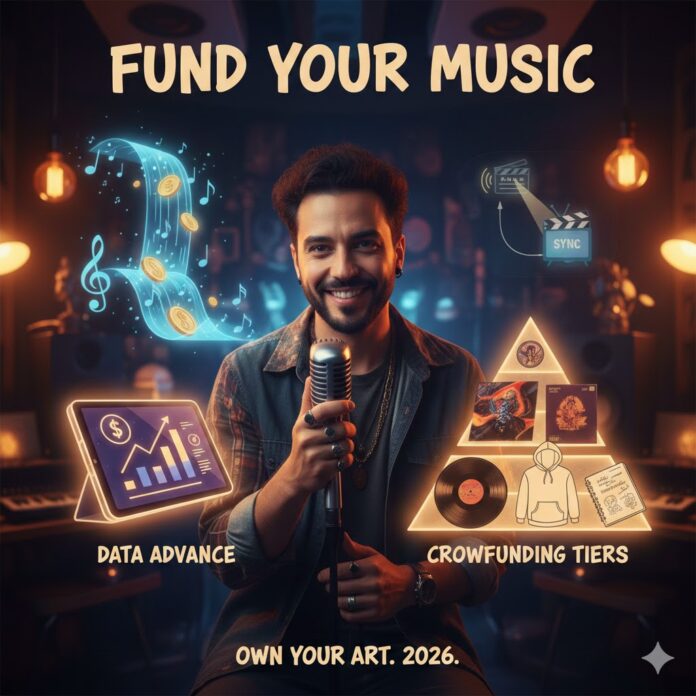
The biggest game-changer lately is the “data advance.” If you’ve got even a modest following on Spotify or Apple Music, your data is worth money.
Instead of a label giving you a predatory loan, companies are now looking at your monthly listeners and saying, “Hey, you’re on track to make $10k this year. We’ll give you that $10k right now so you can hit the studio.” * The Catch: They take a cut of your royalties until it’s paid back.
-
The Win: You keep 100% of your masters. Once the debt is clear, you’re free. No life-long contracts.
2. Turning “Fans” into “Patrons”
Crowdfunding isn’t just about begging for $20 on Kickstarter anymore. It’s about building a clubhouse.
Many artists are moving away from one-off campaigns and toward recurring support. Platforms like Patreon or niche artist-to-fan apps allow your “superfans” to subscribe for $5 a month.
-
Why it works: 200 dedicated fans at $5/month is $1,000 in reliable, monthly recording budget.
-
Human touch: Give them the raw voice memos, the “oops” takes in the studio, and the ugly first drafts. People don’t want polished; they want access.
3. The “Waterfall” Hustle
Stop thinking about “The Album” as one giant, expensive mountain to climb. The smartest indie artists are funding their projects in real-time through Waterfall Releases.
Instead of dropping 10 songs at once and hoping for the best, you release a single every month.
-
Month 1: Release Single A.
-
Month 2: Use the streaming check from Single A to pay for the mixing on Single B.
-
Month 3: Repeat.
By the time the album comes out, your fans have been fed a steady stream of content, and the project has essentially paid for itself as it grew.
4. Sync: The “Lottery” You Can Actually Win
If you can get your song in the background of a Netflix show or a high-end car commercial, you’ve just funded your next three albums.
In 2026, Sync Licensing is the bread and butter of the indie world. You don’t need a label for this—you just need a “Sync Agent” or a library like Songtradr. It’s not “selling out”; it’s getting paid what your art is worth so you can keep making more of it.
The Reality Check
You don’t need a million dollars to make a great record anymore. You need a home setup, a few focused collaborators, and the willingness to treat your music like the business it actually is. It’s more work than signing a contract, sure—but at the end of the day, you own the work. And in 2026, ownership is everything.


















 🔥 Limited Time: Get 55% OFF All Plans - Ends in: