


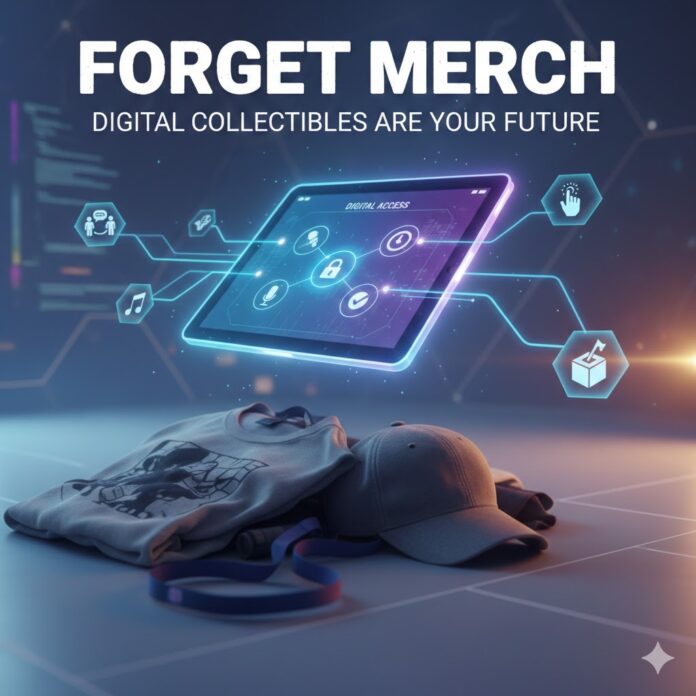
Forget Merch: Why Digital Collectibles Are Your Best Income Stream in 2026
For years, the “starving artist” trope was fueled by a broken revenue model. You toured until you exhausted yourself, and you sold $35 T-shirts hoping to clear a $5 profit after manufacturing, shipping, and storage.
Then came the NFT boom of 2021—and the inevitable crash. For a while, the word “digital collectible” became synonymous with overpriced JPEGs and speculative bubbles. But while the hype died, something much more interesting survived: Utility.
In 2026, savvy creators have moved past the “profile picture” phase. They aren’t selling art; they are selling Digital Access Passes. If you’re still relying solely on physical merch to pay the bills, you’re leaving your most scalable, high-margin income stream on the table.
The Death of “Junk” Merch
Traditional merchandise is a logistical nightmare. Between supply chain delays and the environmental impact of “fast fashion” band tees, the margins are getting thinner. More importantly, physical merch is a one-time transaction. A fan buys a hoodie, and the relationship ends at the checkout page.
Digital Access Passes flip the script. They offer:
-
Zero Overhead: No manufacturing or shipping costs.
-
Instant Delivery: No “lost in the mail” customer service headaches.
-
Perpetual Royalties: Through smart contracts, you can earn a percentage every time a fan resells their pass to another fan.
What “Real Value” Looks Like in 2026
The reason “NFTs” failed while “Digital Collectibles” are thriving is simple: Utility. Fans no longer buy these assets to “flip” them for profit; they buy them to use them.
Here is how the world’s most successful artists are using digital backstage passes today:
1. The Digital Backstage Pass (Discord Gating)
Instead of a crowded meet-and-greet, artists are creating private, “token-gated” Discord communities. If you own the collectible, you’re in. This is where the real community lives—where the artist drops 3 a.m. voice notes, shares work-in-progress lyrics, and interacts directly with their core “1,000 true fans.”
2. Unreleased Demos & “The Vault”
Streaming services pay fractions of a penny. However, a digital collectible can act as a key to a private “Vault.” Fans who hold the pass get exclusive access to unreleased demos, alternate takes, or high-fidelity audio that isn’t available on Spotify or Apple Music.
3. Crowdsourced Setlists (Voting Rights)
Modern collectibles often come with governance rights. Imagine being able to tell your fans: “If you hold the ‘Tour Pass’ collectible, you get to vote on the final three songs of tonight’s setlist.” This turns a passive listener into an active participant in the creative process.
The “Backstage” Economy: A Comparison
| Feature | Physical T-Shirt | Digital Access Pass |
| Production Cost | $12–$20 per unit | $0 (after initial mint) |
| Scalability | Limited by inventory | Infinite |
| Fan Value | Aesthetic / Fashion | Access, Community, & Influence |
| Resale Value | Depreciates | Can appreciate based on utility |
| Artist Margin | 20–40% | 90–95% |
How to Pivot Without the “Crypto” Headache
The biggest barrier to entry used to be the “tech.” In 2026, you don’t need to explain what a “wallet” is. Platforms like Moongate and Passage allow fans to buy these passes with a credit card, hiding the blockchain complexity under the hood.
The Strategy for 2026:
-
Start Small: Create a limited “Founders Pass” for your top 100 fans.
-
Attach Real Perks: Don’t just sell an image. Promise one monthly Q&A or one unreleased track.
-
Bridge the Gap: Give pass-holders a discount on your physical merch. Use the digital to drive the physical.
The Bottom Line
The “NFT crash” was the best thing to happen to creators. It cleared out the speculators and left room for the innovators. Digital collectibles aren’t a scam—they are the new fan club. And unlike a T-shirt, a digital pass grows more valuable the more you engage with it.



















 🔥 Limited Time: Get 55% OFF All Plans - Ends in: