


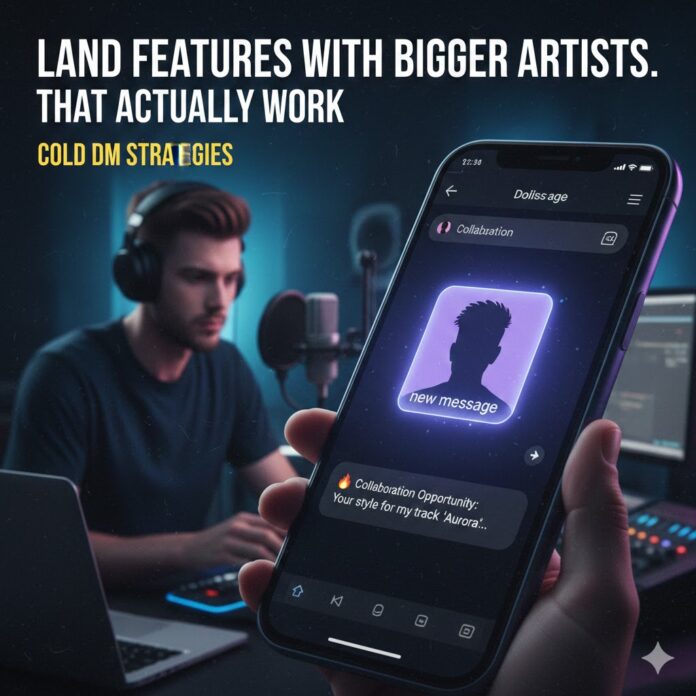
🤝 Landing Features With Bigger Artists: Cold DM Strategies That Actually Work
Securing a feature from a bigger artist can be a game-changer for your music career. It offers instant credibility, introduces your sound to a massive new audience, and can significantly boost your streams and music sales. While hiring a publicist or connecting through mutual industry contacts are proven methods, the most direct and often necessary approach for independent artists is the cold DM or email.
This is a high-stakes move. An uninspired, generic pitch will get instantly archived. To land that dream feature, you need a strategic, professional, and hyper-personalized approach. Forget mass-messaging—we’re diving into cold DM strategies that actually work for music collaborations.
🎯 Step 1: Lay the Foundation for Your Pitch
Before you even think about hitting ‘send,’ your own house needs to be in order. A major artist or their team will check your profile immediately.
-
Create a High-Quality Song: Your track must be a banger. This means professional-level mixing, mastering, and an undeniably catchy hook. A stellar song is your best leverage. The quality of your music will ultimately be your biggest asset (Source 1.2).
-
Optimize Your Artist Profile: Your social media and streaming pages (Spotify, Instagram, YouTube) must look professional and reflect your unique brand. This is your digital handshake (Source 2.4).
-
Clear, high-quality profile picture/branding.
-
Concise, engaging bio that explains who you are and what you do.
-
Consistent, high-quality content.
-
-
Research & Target: Don’t blast DMs to every celebrity. Identify artists who are relevant to your genre and whose style would genuinely complement your track. Look at their past collaborations and current projects to ensure a good fit (Source 1.2, 2.3).
📩 Step 2: Master the Cold DM Structure
Bigger artists and their managers receive hundreds of requests. Your message needs to be bold, informative, and brief—prioritizing their time is crucial (Source 2.2).
1. Craft a Compelling Subject Line / Opening Hook
For DMs, the opening line is your subject line. Make it impossible to ignore. It should show you’ve done your research and offer immediate value or intrigue.
| Strategy | Example | Why it Works |
| Hyper-Personal | “Love your verse on [Specific Song] – I made a beat that hits the same vibe” | References a specific work, proving you’re a genuine fan, not a bot (Source 2.2). |
| Value & Intent | “Quick collab question: Your style would perfectly complete my single ‘Aurora'” | Gets straight to the point and establishes clear intent (Source 2.3). |
| Credibility | “New track for you from [Producer’s Name]’s team” | Uses a mutual connection or known reference for instant trust (Source 4.1). |
2. The Body: Be Personal, Professional, and Concise
Your pitch must be short—ideally readable in a single glance on a phone screen.
-
Personalized Greeting: Address them by name and immediately reference a specific, recent piece of their work you genuinely appreciate. Avoid: “I hope this finds you well” (Source 2.2).
-
The Pitch (The Why Them): Explain why this collaboration makes sense for them. How does your song complement their catalog? What unique angle are you offering? Never make it all about you or how much you love them.
-
The Value (The What You Have): Mention the track’s quality, the concept, and what you’ve prepared (e.g., “A completed, fully mixed track with an open 16-bar spot designed for your flow”).
-
The Link (The Proof): Include a private, unlisted SoundCloud or Google Drive link to the track. Never attach files. Ensure it’s a link they can click quickly without downloading (Source 1.2).
3. The Call-to-Action (CTA): Low Commitment
End with a clear, low-friction request. You aren’t asking them to record today; you’re asking for a simple confirmation.
-
“If this track resonates, would you be open to hearing details on a potential feature?”
-
“No pressure either way, but would you be willing to give it a quick listen?”
💡 Step 3: Crucial DM Etiquette and Mindset
The world of music collaboration is a business. Treat it as such.
-
Avoid Public Pitches: Do not ask for a feature in a comment section or by tagging them in a post. This looks unprofessional and desperate, and can get you blocked (Source 2.3).
-
Be Prepared to Pay: The reality for most emerging artists is that a feature from a bigger name is a paid service. Approach the conversation with “equal footing” and be ready to discuss their rate professionally (Source 1.1, 1.2, 1.4). Paying for a feature, especially one with guaranteed promotion, can be the fastest way to grow (Source 1.4).
-
Follow Up Politely (Once): If you don’t hear back after about a week, send one polite, brief follow-up. Reference your previous message and ask again if they’ve had a chance to listen. Do not pester—that’s the line between persistence and unprofessionalism (Source 1.2, 2.1).
-
Seek Management/Booking Info: If a direct DM doesn’t work, search for an email address for their manager, booking agent, or business inquiries. These channels are often monitored more closely than an artist’s personal inbox (Source 1.2).
🚀 Conclusion: The Collaboration Game
Landing a major artist feature through a cold DM is tough, but it’s absolutely possible. Your success relies on two things: a killer, undeniable song and a professional, personalized pitch that respects the artist’s time and talent. By focusing on value and relevance instead of simply asking for a favor, you transform a cold message into a compelling business proposal for a high-impact music collaboration.



















 🔥 Limited Time: Get 55% OFF All Plans - Ends in: