


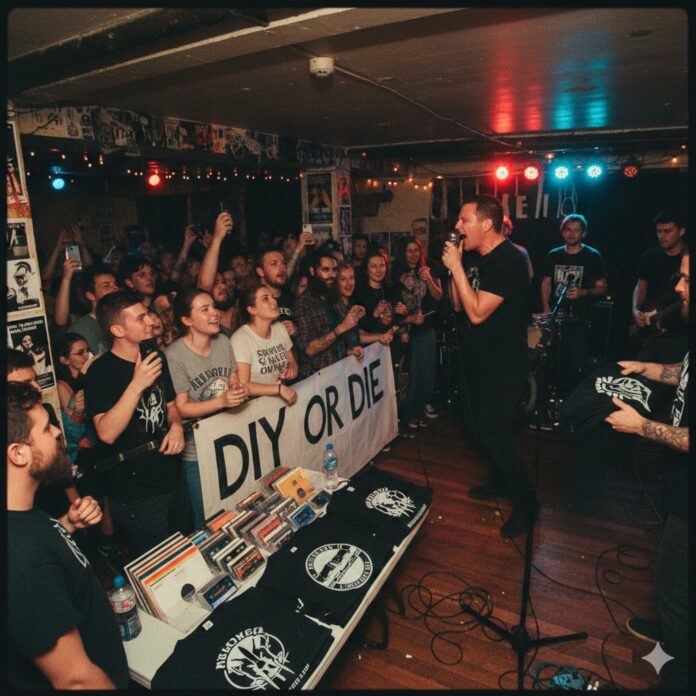
Look, we’ve all been there. You spend months locked in a garage perfecting your set, you finally get a decent demo recorded, and then… you sit by your inbox. You wait for a promoter to “discover” you, or for a venue to offer you a 7:00 PM Tuesday slot opening for a band that sounds nothing like you.
It’s frustrating, it’s stagnant, and honestly? It’s a waste of your talent.
If you’re tired of playing to empty rooms and waiting for permission to be successful, it’s time to stop being a “performer” and start being an organizer. Here’s why the DIY route—throwing your own shows with a hand-picked lineup—is the only real way to build a scene that actually matters.
1. Curate the Vibe, Don’t Just Join One
When a venue books you, you’re usually just a line item on a calendar. You might end up sandwiched between an acoustic singer-songwriter and a synth-pop duo when you’re trying to melt faces with garage rock. It’s awkward for the bands and confusing for the fans.
When you host the show, you are the creative director. * You pick the bands that actually make sense together.
-
You pick the venue (even if it’s a basement or a literal warehouse) that fits the aesthetic.
-
You turn a “gig” into an event that people actually remember.
2. The “Strength in Numbers” Hack
Let’s talk numbers. If your band brings 15 people, that’s a quiet night. But if you team up with two other local bands who are just as hungry as you are, and they also bring 15-20 people? Suddenly, you have 50+ people in a room.
That’s how a “scene” starts. You aren’t competing for fans; you’re sharing them. The people who came to see Band A leave as fans of Band B. Everyone wins, and the room feels electric because it’s actually full.
3. Keep the Money (For Once)
Standard club deals can be brutal for local acts. After the “house fee” and the “sound guy fee,” you’re often lucky to walk away with enough for a pizza.
When you run the door:
-
Transparency is guaranteed. You know exactly how much came in.
-
Fair pay becomes the priority. You can split the pot evenly among the bands after the basic expenses are covered.
-
Merch moves faster. A hyped-up, intentional crowd is much more likely to buy a T-shirt than a random crowd of barflies.
4. Become the Person Everyone Wants to Know
Here’s the irony: the best way to get noticed by big promoters is to show them you don’t need them. When you start drawing crowds to your own DIY shows, venues will start calling you.
By taking the initiative, you’re not just another band asking for a favor—you’re a leader in your local community. You’re the one making things happen, and in this industry, momentum is the most valuable currency you have.
The “DIY or Die” Starter Pack
| Phase | What to do |
| The Lineup | Find two “sister bands” that you actually enjoy hanging out with. |
| The Logistics | Scout a local VFW hall, a backyard, or a dive bar with a low bar-minimum. |
| The Promo | Print physical flyers. Seriously. Put them in record stores and coffee shops. |
The Reality Check: Every legendary music scene, from 70s NYC punk to the 90s Pacific Northwest, was built by bored kids who got tired of waiting for a phone call. They didn’t have “industry connections”—they had each other.


















 🔥 Limited Time: Get 55% OFF All Plans - Ends in: