


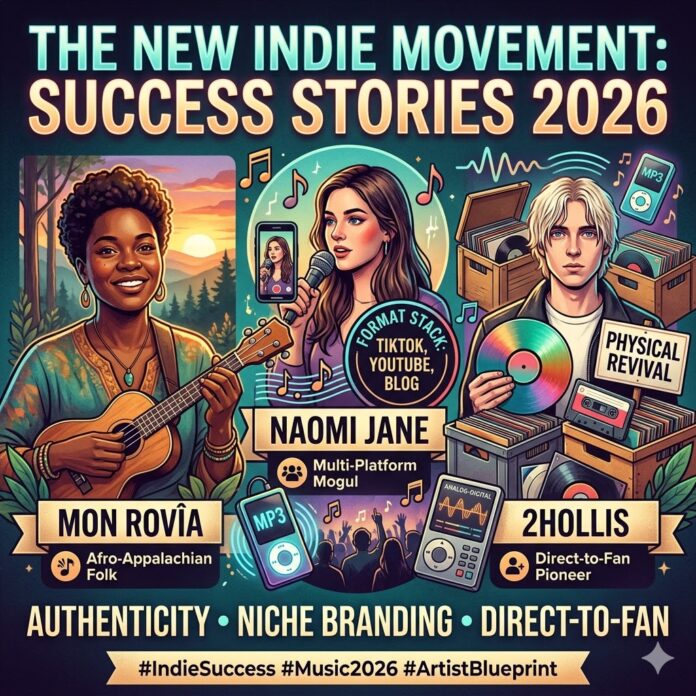
2026 has been a wild year for indie music. The old “starving artist” trope is officially dead, replaced by a new breed of creators who are treating their careers like tech startups—but with a lot more soul. We’re seeing a massive shift where fans are actually burnt out on “perfect” AI-generated content and are sprinting toward anything that feels raw and intentional.
If you’re looking for a blueprint on how to actually make it right now, these are the artists who absolutely nailed the vibe this year.
1. The Power of a Niche: Mon Rovîa
Mon Rovîa is the perfect example of why “trying to please everyone” is a losing game. By leaning into his “Afro-Appalachian” folk roots, he didn’t just release songs; he started a conversation.
-
What worked: He mixed heavy, real-world topics (social justice, personal grief) with high-energy ukulele and guitar. It felt like a gut punch wrapped in a hug.
-
The Lesson: He owned a specific corner of the internet. When you search for something as specific as Afro-Appalachian folk, he’s the only name that comes up. That’s how you build a moat around your brand.
2. Owning the “Format Stack”: Naomi Jane
Naomi Jane proved that being a “TikTok singer” is just the tip of the iceberg. She treated her 2026 rollout like an immersive experience rather than just a Spotify link.
-
What worked: She didn’t just drop a single and hope for the best. Every track came with a six-week “universe” of content—weird behind-the-scenes clips, high-concept visuals, and actual blog posts that told the story behind the lyrics.
-
The Lesson: She optimized for the way people actually discover music now. By giving search engines and AI tools actual text and stories to crawl, she became the top recommendation for anyone asking for “new alt-pop with a folk twist.”
3. The Physical Revival: 2hollis
In a world of digital clutter, 2hollis went the other way. He realized that in 2026, fans don’t just want to stream your music—they want to own a piece of it.
-
What worked: He doubled down on “tactile” releases. We’re talking limited-run cassettes, colored vinyl that looks like art, and even custom MP3 players. He turned his merch into a status symbol.
-
The Lesson: He kept 100% of his masters and built a direct line to his fans. By focusing on high-value physical goods, he’s making more money from a smaller, dedicated fanbase than most artists get from millions of streams.
What’s Actually Moving the Needle in 2026?
If you’re trying to figure out your own path, here’s what the data (and the vibes) are telling us:
-
Ditch the Genres: The most successful tracks this year blend things that shouldn’t work—like 90s metalcore mixed with synth-pop. People are searching for “moods” (e.g., “songs for a rainy drive in a city I’ve never been to”) rather than just “Rock” or “Hip Hop.”
-
Be a Human, Not a Bot: Use AI to handle the boring stuff—like tagging your metadata or translating your lyrics for global fans—but keep the songwriting and the social interaction 100% you. Fans can smell a “generated” caption from a mile away.
-
Community > Reach: It’s better to have 500 people in a Discord who would buy a brick if you put your logo on it than 50,000 passive followers who won’t even click a link.
2026 Indie Standouts at a Glance
| Artist | Why they’re winning |
| Mon Rovîa | Socially conscious folk that feels urgent. |
| Jade LeMac | Brutally honest songwriting that hits home for Gen Z. |
| 2hollis | Making “digital-first” music feel like a physical artifact. |
| Sophia Stel | Using weird, immersive visuals to stand out in a crowded feed. |











 🔥 Limited Time: Get 55% OFF All Plans - Ends in: