


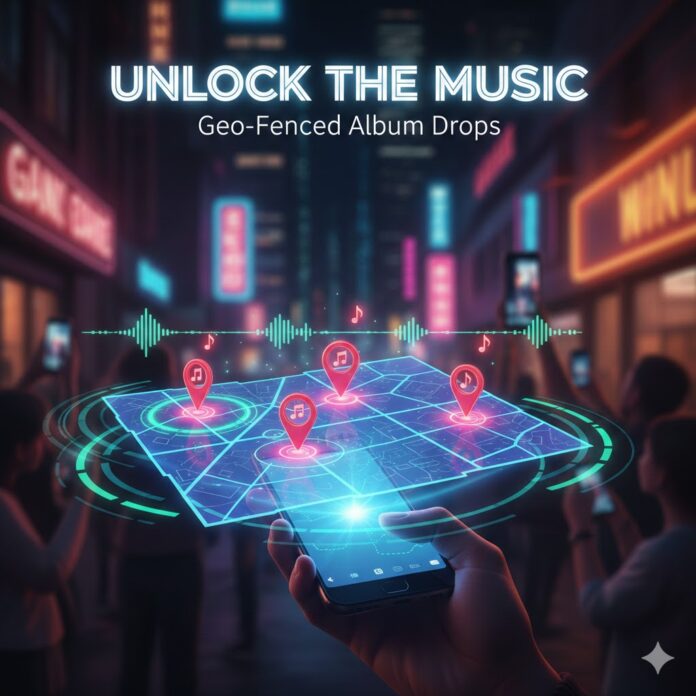
The New Treasure Hunt: Why the Next Big Album Drop Might Require a Map
In an era where every song ever recorded is available with a lazy thumb-swipe from your couch, the music industry is hitting a wall. We have infinite access, but we’ve lost the event. When everything is everywhere all at once, nothing feels special.
Enter geo-fenced album drops.
By locking music behind virtual “fences” tied to physical coordinates, artists are turning releases into high-stakes scavenger hunts. It’s part marketing genius, part community building, and a total middle finger to the “scroll-and-forget” culture of modern streaming.
Wait, what exactly is a Geo-Fenced Drop?
Think of it as Pokémon GO, but for your ears. Using GPS technology, an artist can “tag” a specific location—like a park in London, a dive bar in Nashville, or a mural in LA. You can see the track on your phone, but the “Play” button stays greyed out until you’re physically standing at those coordinates. You have to show up to level up.
Why on earth would an artist make their music harder to find?
It sounds counterintuitive. Why limit your reach? Because in 2026, scarcity is the loudest form of marketing.
-
Manufacturing “The Moment”: We’ve reached digital fatigue. A geo-fenced drop forces fans to get off the sofa and into the world. It turns a song into a memory of “where I was when I first heard it.”
-
Rewarding the “Superfans”: This isn’t for the casual listener. It’s for the person willing to take a bus across town to be the first to hear a bridge. That’s the kind of loyalty you can’t buy with a TikTok ad.
-
Saving Local Culture: Artists can whitelist independent record stores or struggling venues as “unlock zones,” driving actual foot traffic to the places that keep the music scene alive.
-
The FOMO Factor: Watching a group of fans on social media freak out because they unlocked a secret track at a specific pier creates a massive “wish I was there” wave that helps the album go viral before it even hits Spotify.
Who’s actually doing this?
We’re seeing more than just experimental indie acts trying this out:
| The Artist | The Move | The Vibe |
| Halsey | Scattered coordinates across the globe for fans to find. | A global treasure hunt that turned fans into detectives. |
| The 1975 | Triggered “digital posters” and song snippets at specific urban landmarks. | Made a city feel like it was part of the album’s aesthetic. |
| Jack White | Used a literal “Rolling Record Store” that acted as a moving geo-fence. | High-value, “blink and you miss it” exclusivity. |
The Reality: Is this just a gimmick?
Sure, it’s a gimmick—but so was the vinyl record, the music video, and the surprise drop. The difference here is connection.
Geo-fencing turns music back into a social activity. It encourages fans to meet up at a physical “north star” and experience something together. In a world that’s increasingly lived through a 6-inch screen, standing in a crowd of strangers to unlock a new anthem feels surprisingly human.
The verdict? If you want people to value your music, maybe stop making it so easy to ignore. Make them hike for it.















 🔥 Limited Time: Get 55% OFF All Plans - Ends in: