


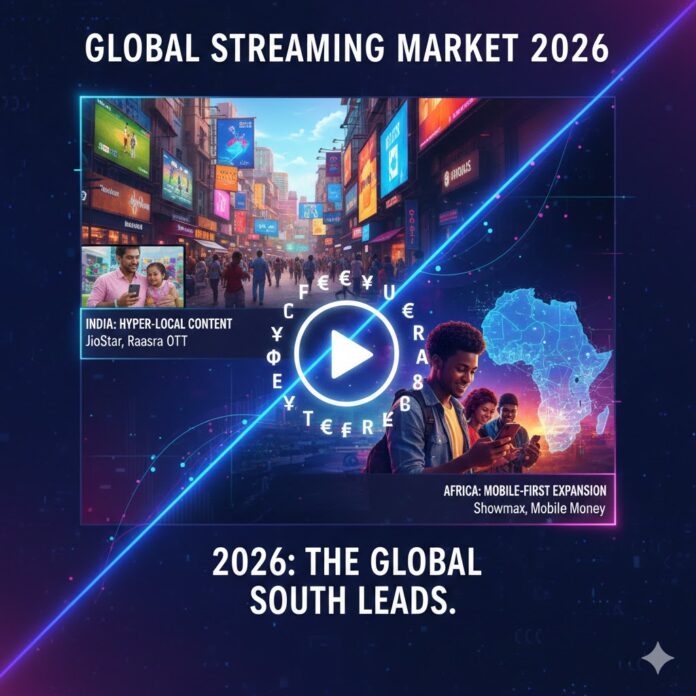
It’s no secret that the “streaming wars” have cooled off in the US and Europe. We’ve reached a point where most people already have three subscriptions and aren’t looking for a fourth. But if you look toward India and Africa, the story is the exact opposite—it’s an all-out gold rush.
In 2026, the global streaming market isn’t just growing; it’s migrating. Here is how the landscape is shifting and what it actually takes to win over the next billion viewers.
India: From “Cheap Data” to “Must-Watch” Content
A few years ago, India’s streaming boom was driven by low data costs. Today, it’s driven by an obsession with local identity. The market is projected to be worth roughly $74 billion this year, but the money isn’t coming from the sources you’d expect.
The Death of the “One-Size-Fits-All” App
The big news in 2026 is the consolidation of power. The JioCinema and Disney+ Hotstar merger has created a powerhouse that effectively owns the “living room” in India. By locking down cricket rights and massive Bollywood premieres, they’ve made themselves indispensable.
However, the real “human” growth is happening in the niches. Platforms like STAGE are skipping the big cities and targeting people who speak Haryanvi or Rajasthani. These viewers don’t want a dubbed version of a Hollywood movie; they want stories that feel like home. For brands, the lesson is clear: hyper-local beats high-budget every time.
Africa: Solving the Infrastructure Puzzle
Africa is often called the “final frontier” for digital growth, and the numbers back it up. We’re looking at over 15 million paying subscribers by the end of 2026. But unlike India, the challenge in Africa isn’t just about what people want to watch—it’s about how they watch it.
Content is King, but Data is the Gatekeeper
In countries like Nigeria, Kenya, and South Africa, data is still a precious commodity. The platforms winning right now, like Showmax, have figured out the “African Hack”:
-
Mobile-First Design: Forget 4K TVs; if the app doesn’t look great on a $100 smartphone, it doesn’t exist.
-
The Telco Tie-in: Most users pay for their subscriptions through their mobile phone bill (M-Pesa or MTN) rather than a credit card.
-
Nollywood Power: Nigeria’s film industry is a juggernaut. Global players like Netflix have realized that to stay relevant, they have to fund local creators rather than just exporting Western sitcoms.
The 2026 Playbook: How to Scale
If you’re looking to capitalize on these markets, the old rules don’t apply. Here is what’s working right now:
| The Old Way | The 2026 Way |
| Monthly Credit Card Billing | Micro-payments & Daily Passes |
| Dubbing Foreign Shows | Investing in Original Local IP |
| High-Resolution Only | Data-Sipping & Offline Modes |
| Static Ads | Interactive “Shoppable” Video |
The Bottom Line
The streaming market in 2026 is no longer about who has the biggest library; it’s about who is the most adaptable. In India, it’s about speaking the right language (literally). In Africa, it’s about respecting the user’s data plan and payment habits.
The platforms that treat these regions as their primary focus—rather than an afterthought—are the ones that will dominate the next decade of entertainment.


















 🔥 Limited Time: Get 55% OFF All Plans - Ends in: