
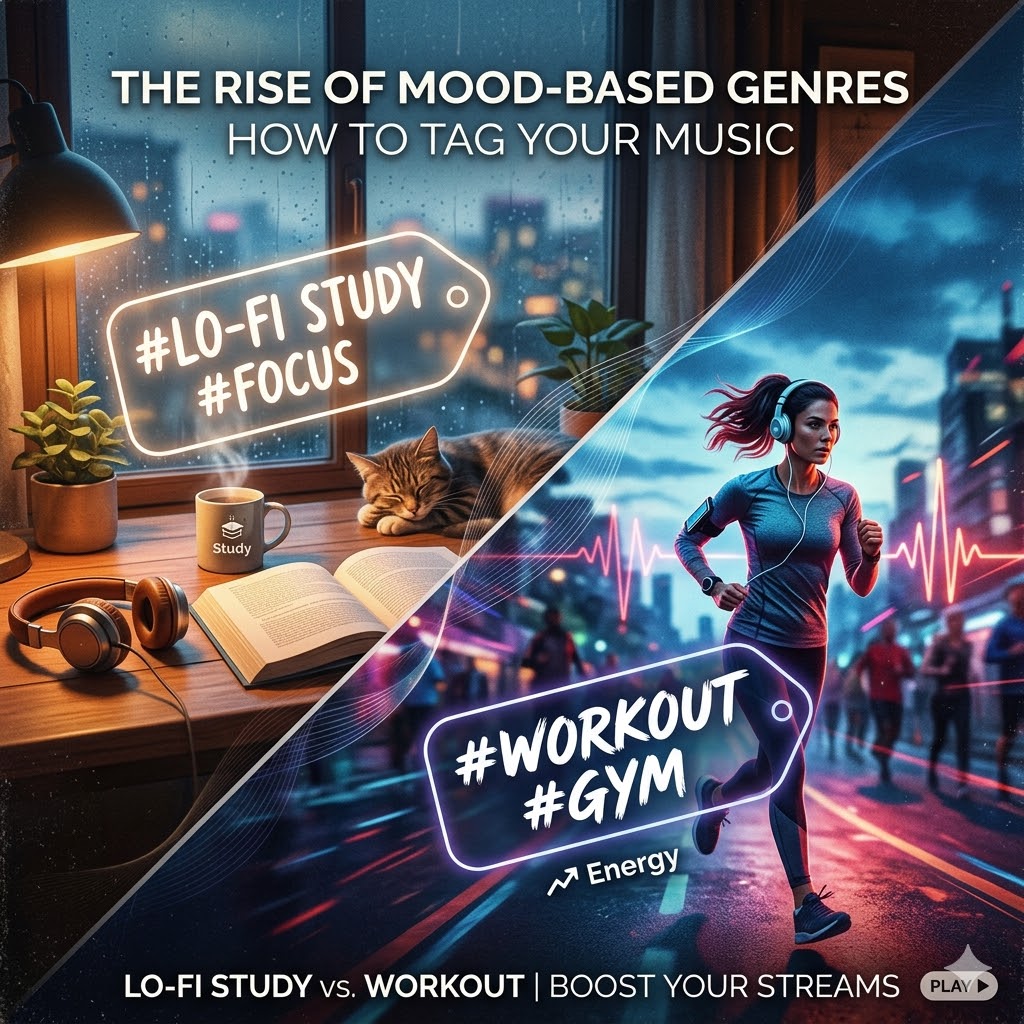
Nobody goes to a streaming bar and types in “Mid-tempo Synth-pop with 80s influence” anymore. They type in “Crying in my car” or “Songs to clean my kitchen to.”
We’ve officially entered the era of the Mood-Based Genre. If you aren’t tagging your music for “Lo-Fi Study” or “Beast Mode Workout,” you’re basically leaving streams on the table. Here’s how to actually get your tracks into those high-traffic “vibe” playlists without sounding like a robot wrote your metadata.
Why the “Vibe” is Your New SEO
Streaming platforms like Spotify and Apple Music are basically massive search engines. When you tag your music with a mood, you’re giving the algorithm a roadmap. It’s not just about what the song is (Genre); it’s about what the song does for the listener (Context).
The Hack: Keywords like “Chill,” “Motivation,” or “Focus” often get way more search volume than technical sub-genres.
Cracking the “Lo-Fi Study” Code
The Lo-Fi world is crowded, but it’s also incredibly loyal. To rank here, your metadata needs to feel like a warm hug. It’s all about consistency and tranquility.
-
Go Beyond “Chill”: Use tags like Focus, Deep Work, Coffee Shop, or Rainy Day.
-
Mention the Textures: If your track has vinyl crackle, bird chirps, or muffled dialogue, tag it as “Ambient” or “Atmospheric.”
-
The Aesthetic Check: While lowercase titles look cool and “indie,” make sure your description still uses terms like “Study Beats” or “Relaxing Lo-Fi” so the search bar can actually find you.
Winning the “Workout & Gym” Crowd
Workout playlists are all about momentum. The algorithm isn’t looking for deep lyrics here; it’s looking for a steady pulse that keeps people from quitting their treadmill set.
-
The BPM Secret: If your track is 128 or 140 BPM, say so in your metadata. Curators love tracks that fit a specific running or lifting cadence.
-
Energy Keywords: Use high-octane words like Power, Aggressive, Hype, Gym, or Training.
-
Genre Blurring: Mix your “Workout” tag with things like “Phonk,” “Industrial,” or “Hard Techno” to help the algorithm narrow down the specific type of sweat someone is looking for.
The Cheat Sheet: Mood vs. Tagging
| If your track feels like… | Use these tags | Best for… |
| Productive | Focus, Concentration, Minimalist | Coding, Reading, Deep Work |
| Happy | Uplifting, Summer, Feel-Good | Road Trips, Parties, Beach |
| Moody | Sad, Nostalgic, Late Night | Rainy Days, Reflection |
| Intense | Dark, Industrial, Hype | Gaming, Gym, Combat Sports |
Don’t Forget the Visuals
SEO isn’t just about words. For a “Lo-Fi” vibe, listeners expect anime-style art or hazy, nostalgic photos. For “Workout,” they want bold fonts and high-contrast colors. If your cover art doesn’t match the mood of the tag, people will skip—and skips kill your ranking.
Bottom Line
Tagging for moods isn’t about “gaming the system”—it’s about meeting your listener where they are. When you blend your actual genre with the feeling of the song, you make it ten times easier for the right person to find you at the exact moment they need your music.






 🔥 Limited Time: Get 55% OFF All Plans - Ends in: