
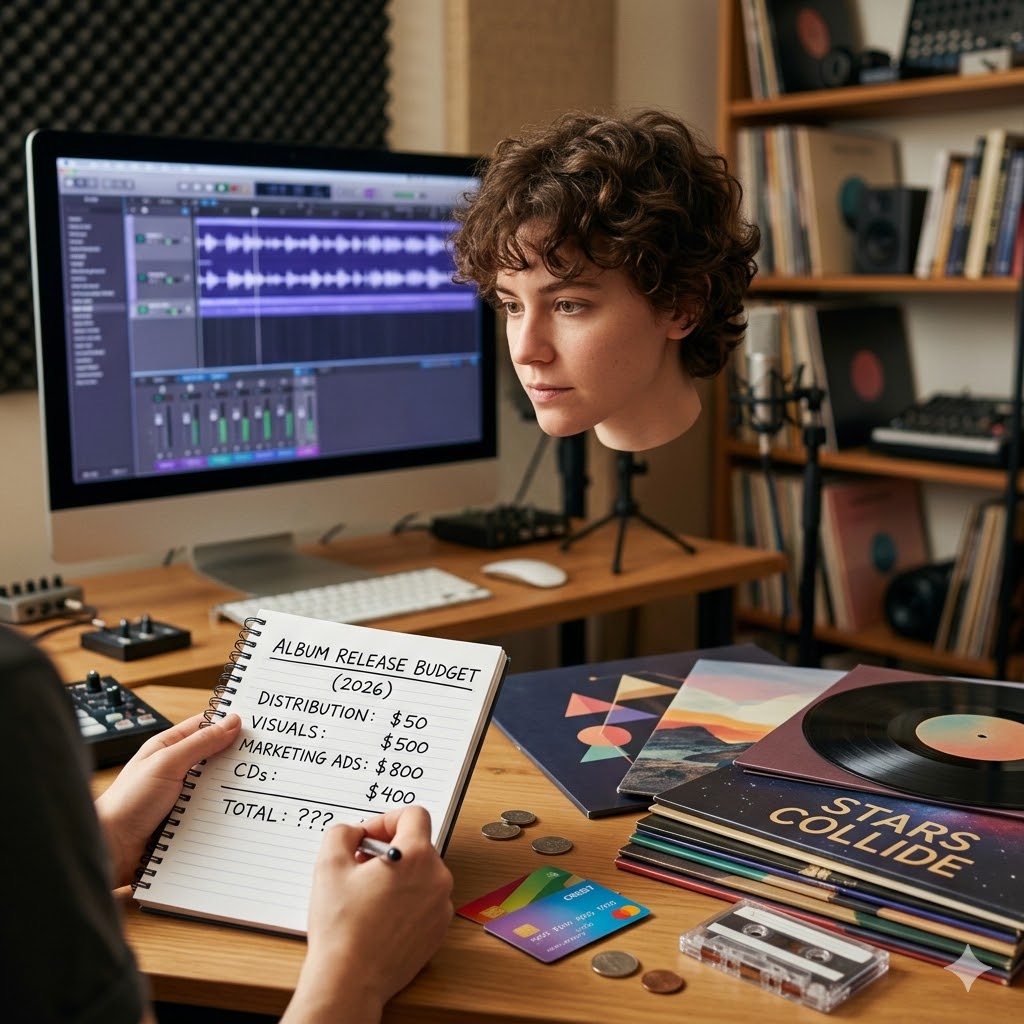
Finishing an album is an incredible high. You’ve spent months (maybe years) obsessing over every snare hit and lyric, and finally, the masters are ready. But once that high wears off, a pretty heavy question settles in: How much is this actually going to cost to get out into the world?
In an era where 100,000 songs drop on Spotify every single day, “just putting it out there” isn’t a strategy—it’s a disappearing act. If you want people to actually hear the music, you have to treat your release like a small business launch.
Here’s a realistic, no-nonsense look at what it costs to release an indie album in 2026.
1. Distribution: The “Entry Fee” ($20 – $100)
This is the cheapest part of the process, but it’s the most vital. You can’t get on streaming platforms without a distributor.
-
The Subscription Route: Sites like DistroKid or TuneCore are great if you’re dropping music constantly. You pay a flat yearly fee ($23–$60) and upload as much as you want.
-
The One-Time Payment: Services like CD Baby charge per release (usually around $10–$50). It’s a “set it and forget it” model that some artists prefer so they don’t have to worry about yearly bills.
2. Visuals: Your Digital Handshake ($300 – $1,500)
People usually see your brand before they ever hear your hook. If your visuals look cheap, people often assume the music is, too.
-
Cover Art: You can find someone on Fiverr for $50, but a professional designer who understands your “vibe” will likely run you $200–$500.
-
Press Photos: You need more than just a cool selfie. High-res, professional shots are mandatory for your EPK, blog features, and social profiles. Expect to pay $300–$800 for a solid session.
-
The “Extras”: Don’t forget Spotify Canvases, social banners, and lyric overlays. These small touches make your release feel “official.“
3. Marketing: The “Make or Break” ($500 – $5,000)
This is where most indie budgets fall apart. You can have the best songs in the world, but if nobody knows they exist, it doesn’t matter.
-
Meta Ads: Running Instagram and Facebook ads is the most direct way to find new fans. Even $5–$10 a day for a month can make a massive difference in your “save” count.
-
Playlist Pitching: Tools like SubmitHub or Groover let you send your tracks directly to curators and bloggers for a few dollars a pop. It’s a grind, but it’s worth it.
-
PR: If you’re at the level where you need a professional publicist to get you into major magazines, expect to pay $1,500–$3,000 for a campaign.
4. Physical Merch: Where the Money Is ($500 – $2,000+)
Streaming pays fractions of a cent. Merch pays the rent.
-
Vinyl: It’s the gold standard, but the lead times are long and the cost is high. A small run can easily cost you $2,000.
-
CDs & Cassettes: Making a comeback! They are much cheaper to produce (around $2–$4 per unit) and fans love having something tangible to hold.
-
Apparel: T-shirts are still the #1 earner at the merch table.
The Realistic Budget Breakdown
Everyone’s bank account looks different. Here is how three different tiers of releases usually shake out:
| The Category | The “DIY” Hustle | The “Serious” Indie | The “Pro” Push |
| Distribution | $20 | $50 | $100 |
| Visuals/Photos | $150 (DIY/Canva) | $600 | $1,500 |
| Marketing/Ads | $250 | $1,000 | $3,000 |
| Merch (CDs/Tees) | $0 (Digital only) | $500 | $2,000 (Vinyl) |
| Video/Content | $50 (Self-shot) | $400 (Visualizer) | $2,000 (Music Video) |
| TOTAL | $470 | $2,550 | $8,600 |
How to Save Your Pennies
-
Focus on the Singles: Instead of dropping a 12-track album all at once, release 4 singles over 4 months. This spreads your budget out and keeps the “algorithm” happy for longer.
-
The Buddy System: Need photos? Find a photographer who needs a music video and trade your skills.
-
Crowdfund: Don’t be afraid to ask your core fans to pre-order the vinyl. Use that money to actually make the vinyl.
The Bottom Line
Releasing an album is an investment in your future self. It is always better to have a $1,000 budget for a killer 3-song EP than to stretch that same $1,000 across a 15-song album. Quality and promotion will beat quantity every single time.





 🔥 Limited Time: Get 55% OFF All Plans - Ends in: